There is a moment, after you have pressed the soil down, when your hands do not know what to do next.
They are still damp. There is grit under the nails and a cool, faintly sour smell rising off the ground, and the patch where you knelt looks exactly like the ground around it. A minute ago you were busy: the paper, the fold, the small box, the seed going in. Now there is nothing to tend and nothing to see. You stand, and some part of you keeps looking down, as if the earth might show you something if you waited a little longer. It won't. Whatever happens next will happen where you cannot watch it.
I know that feeling from other places, too. The months when nothing seems to move. The weeks when someone asks how you are and you say fine, because there is no event to report and no shape yet to what is going on underneath.
In the last years of his life, Henry David Thoreau walked the woods around Concord, Massachusetts, following seeds: where the wind carried the pine's, where squirrels buried the acorns they never came back for, which trees rose in the shade of which. In the manuscript he was writing about them, he set down a sentence I keep returning to: “Though I do not believe a plant will spring up where no seed has been, I have great faith in a seed. Convince me that you have a seed there, and I am prepared to expect wonders.” What moves me is where his faith rests. Not on the plant, which he hasn’t seen. On the seed, and on knowing it is there.
He died in 1862 with the manuscript unfinished. It lay in archives for more than a century before it was edited and published in 1993 as Faith in a Seed. A book about waiting that had to wait.
Put a seed in your palm and it will not help you. It has no warmth of its own, and so little weight that you look down to check it is still there. You could carry it in a pocket through a whole winter and take it out in March looking exactly as it did in November, and nothing about it would tell you whether it would ever grow, or whether you had spent the winter carrying a small brown stone.
What it holds is small and unfinished: the start of a root, the start of a shoot, and a store of starch or oil to feed them until they can draw on soil and light. A hard seed coat closes over all of it. For as long as it stays closed, the seed does what looks, from where we stand, like nothing at all.
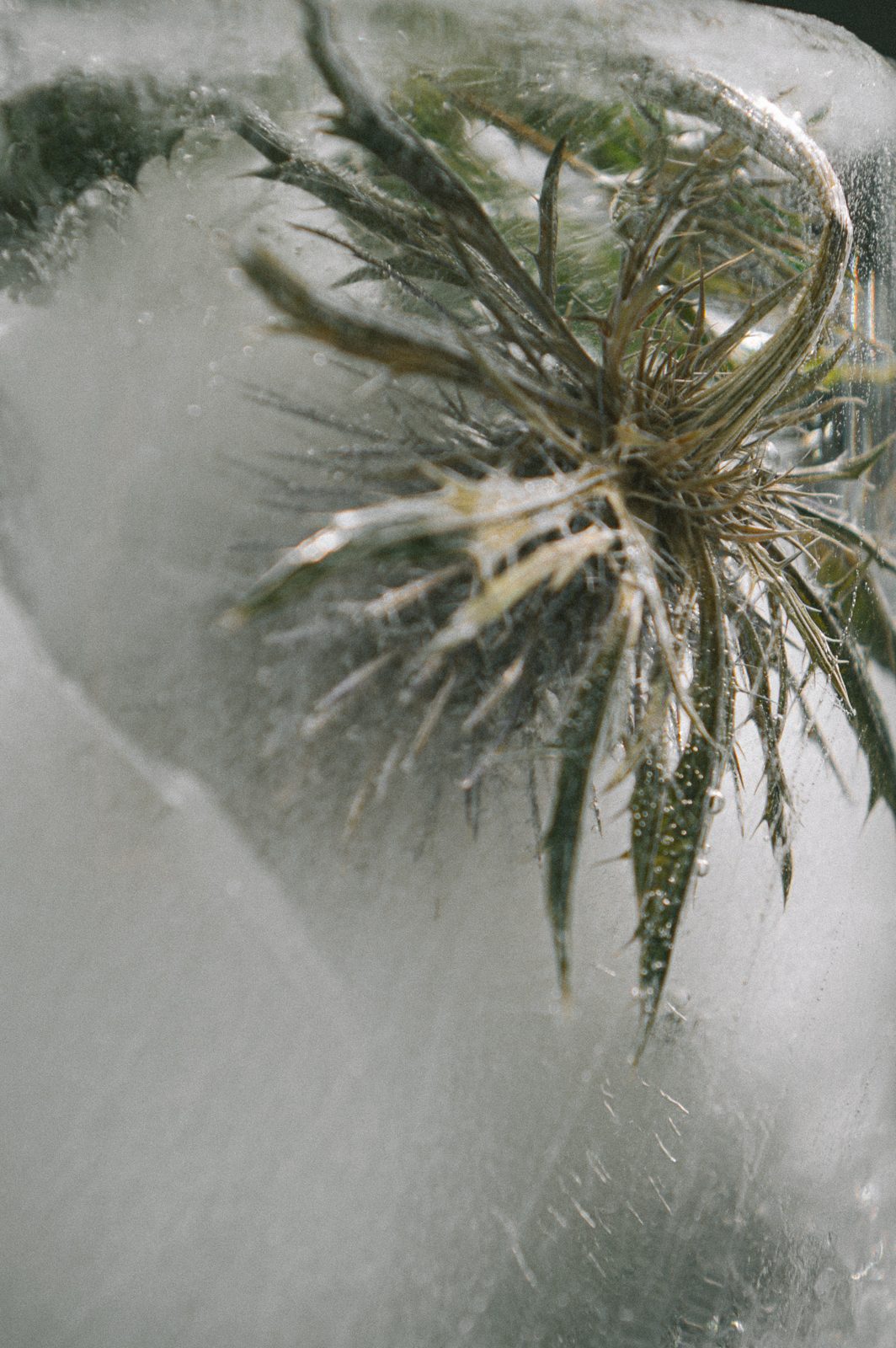
Botanists use the word germination more narrowly than the rest of us do. For them it begins when water gets in, and it is over when the first root breaks out into the soil. The stem, the leaves, the pale hook that lifts a crumb of earth on its back: these come afterward and go by other names. Germination itself happens wholly out of sight. It produces a root, and the root goes down.
I have not been able to put this away since I learned it. The first act of a seed is to go further into the dark it was already in. It makes no move toward the light until it has taken hold. And for a good while after it has begun, the ground above it looks the way it looked the week before.
Some seeds will not do even that. Water, warmth, a mild spring, every condition a seed is said to need, and they stay shut. This is called dormancy. It does not mean the seed is spoiled. Something in its own make-up is holding it back, and many are waiting for a winter to pass over them first.
I want to be careful here, because the seed is not being patient. Dormancy is chemistry and timing, a balance of hormones inside the seed, tuned over many generations to places where sprouting in the first warm week of autumn would mean dying in the first frost. The seed is not waiting the way we wait, hopefully or anxiously, counting the days. It is not waiting for anything at all. That may be why I find it easier to sit beside than most advice about patience. It asks nothing of me, and it promises nothing.
A date seed was dug from the ruins of Masada, on its rock above the Dead Sea, and radiocarbon dating placed it in the first century. It was planted. It came up. The researchers followed the seedling for twenty-six months and reported that it grew as date seedlings ordinarily grow. On any day in the nearly two thousand years before that, it would have looked like it was over.
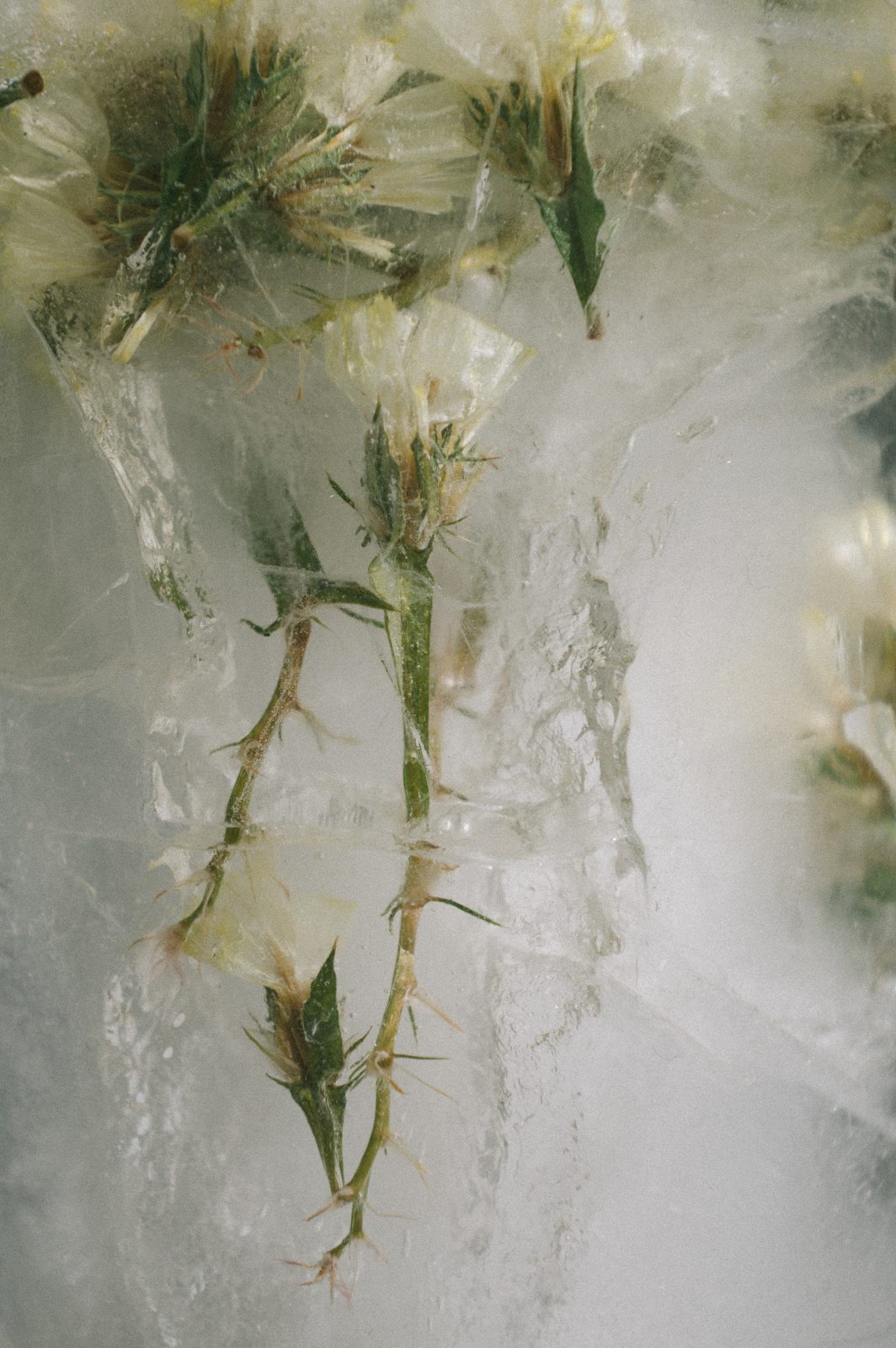
The seed proves nothing about us. But it has made me slower to say what I am looking at: in the ground, in myself, in the person across the table who says they are fine.
Seedling Pages is ten sheets of paper with lines on them and no words. Each one started as a plant I live beside. I photographed it, and then followed only the spaces between its leaves, nearer and nearer again, until I was too close to say what I was looking at. What is left has no name, and I have not given it one.
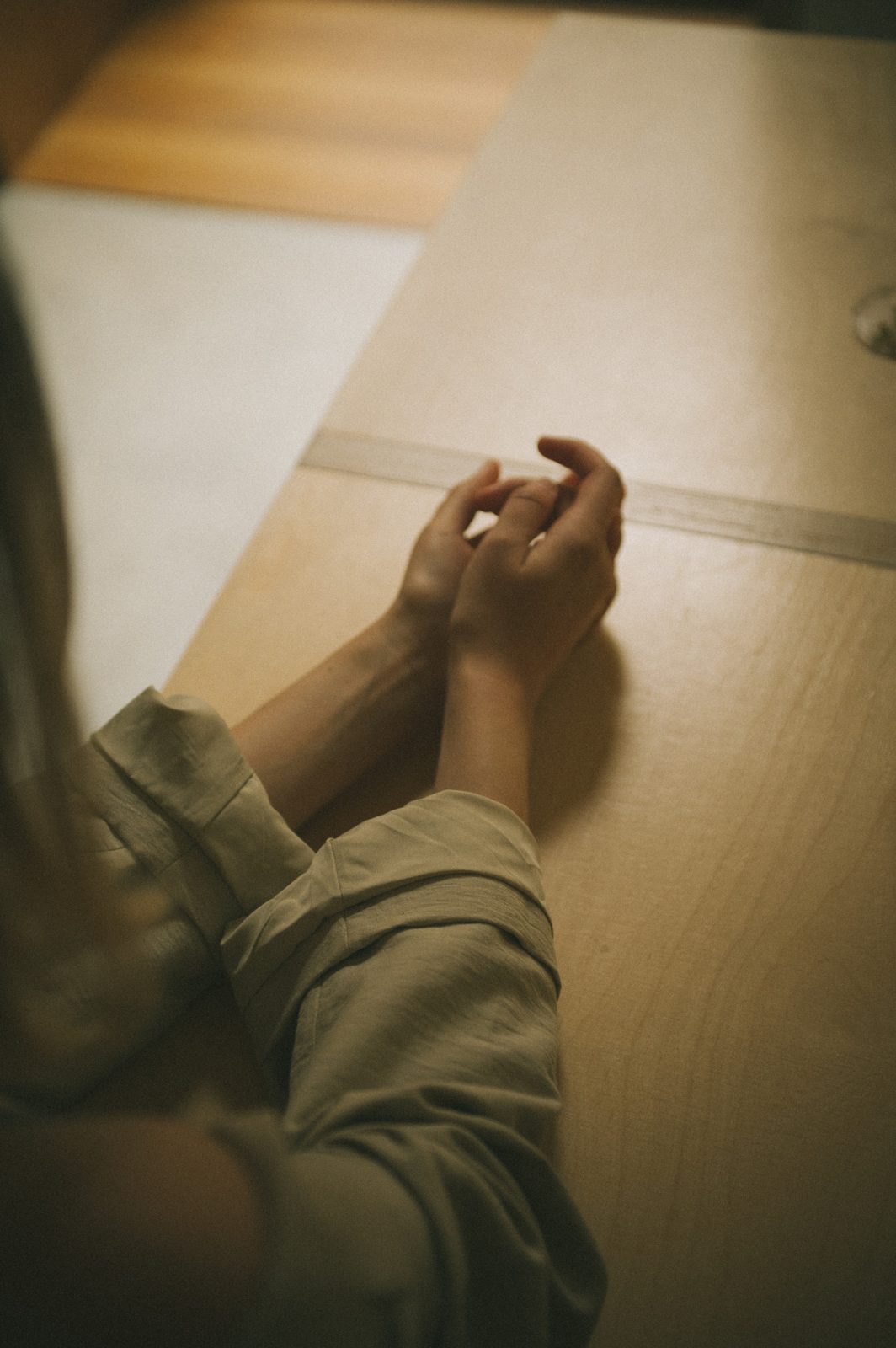
I can’t tell you that colouring a page and burying it does anything a study could measure. I can tell you what an afternoon of it has been like for me. I put a single page on the table and look at it before I pick anything up. The lines run thick in one corner and leave a clearing in another, and my eye has already gone somewhere without asking me. I start there. A pencil drawn along one line makes a small, dry sound. Watercolour on ordinary paper follows the damp and stops at an edge I didn’t choose. For some minutes I am a person filling in a page. Then, on a good day, the table goes, and the question of whether I am doing it well goes with it, and there is only the line and the place it’s heading. I don’t notice this while it is happening. I notice afterward, the way you find out it has stopped raining some time after it did.
It does not always come. When it doesn’t, I stop, and leave the rest of the page bare. A page with one corner coloured is finished.
When the paper is dry, I fold one corner across to make a square, run a wet brush along the crease, and tear. The strip comes away with a soft, furred edge, and I keep it. What remains folds, corners to the centre, into a box about the size of a cupped hand. I fill it with soil, and press in a seed that someone who knows the ground here told me belongs in it.
Then the box goes into the earth: the lines, the colour, the hour I spent. I cover it over and stand up, and there we are again, at the start of this essay, with damp hands and nothing to look at. I can’t check on what I made. I can’t promise you a seedling, either. Some seeds wait a year. Some never come up.
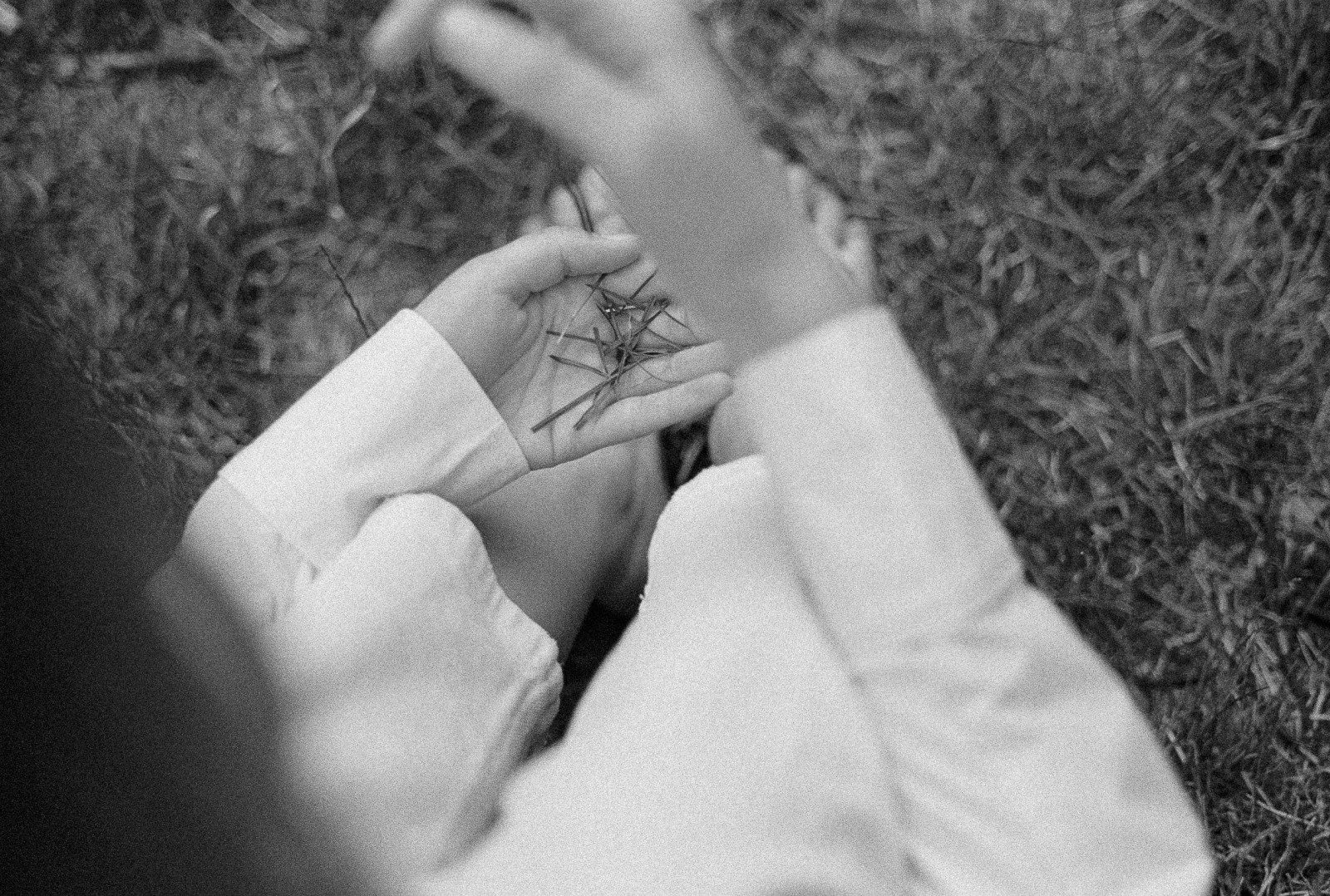
What stays with you is the strip. After a few pages you have a few, and they weave, over and under, into a small square of colour with no picture in it.
You don’t need to do it the way I do. You only need a page, a little soil, and a place where you are allowed to kneel.
Here is the question I am leaving open, because I haven’t answered it: if so much of what matters begins where it cannot be seen, how do we keep company with it, in the ground and in one another, without digging it up to check?
I don’t know yet. Somewhere under the place where you knelt, a root may already have started down.